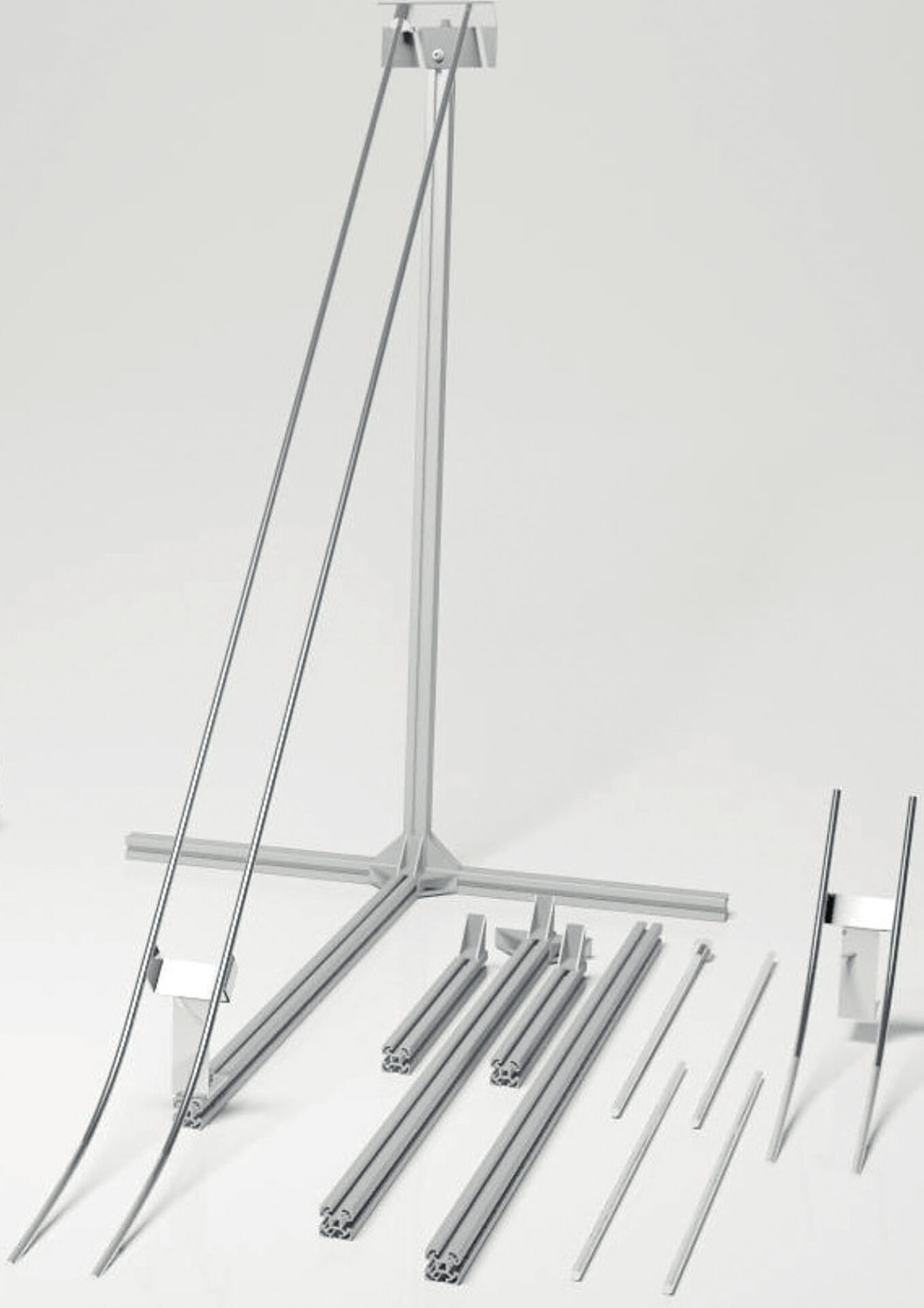






The Ball Roll Ramp is available in two different models. The basic model is designed for field managers operating locally without a need to travel with the equipment. The superior model is designed for extensive travel needs. It is compact, light, and easy to move.
Method of Ball Roll Ramp
The Ball Roll Ramp is a tool used to conduct standard tests for measuring the distance a ball can roll on a playing field.
To measure ball roll, a ball is rolled down a ramp and allowed to come to a stop on the surface being tested. The distance the ball travels across the surface is then measured and recorded.
This ball roll testing method is fully described in the FIFA handbook, under FIFA test method 03, as well as in EN standards, specifically EN 12234.
Equipment
- The ball roll ramp consists of two smooth parallel rounded bars, which have inside edges that are 105 ± 5 mm apart (with more severe tolerance described by EN standard). The ball must transfer from the ramp to the surface without jumping or bouncing.
- The fall height is 1m on a ramp at 45°.
- The method of measuring the distance the ball rolls has an accuracy of +/- 0.01m, and it can be measured using steel tape or a laser.
- The ball used in the test is a football.
- In field tests, the means of measuring wind speed must have an accuracy of 0.1 m/s.