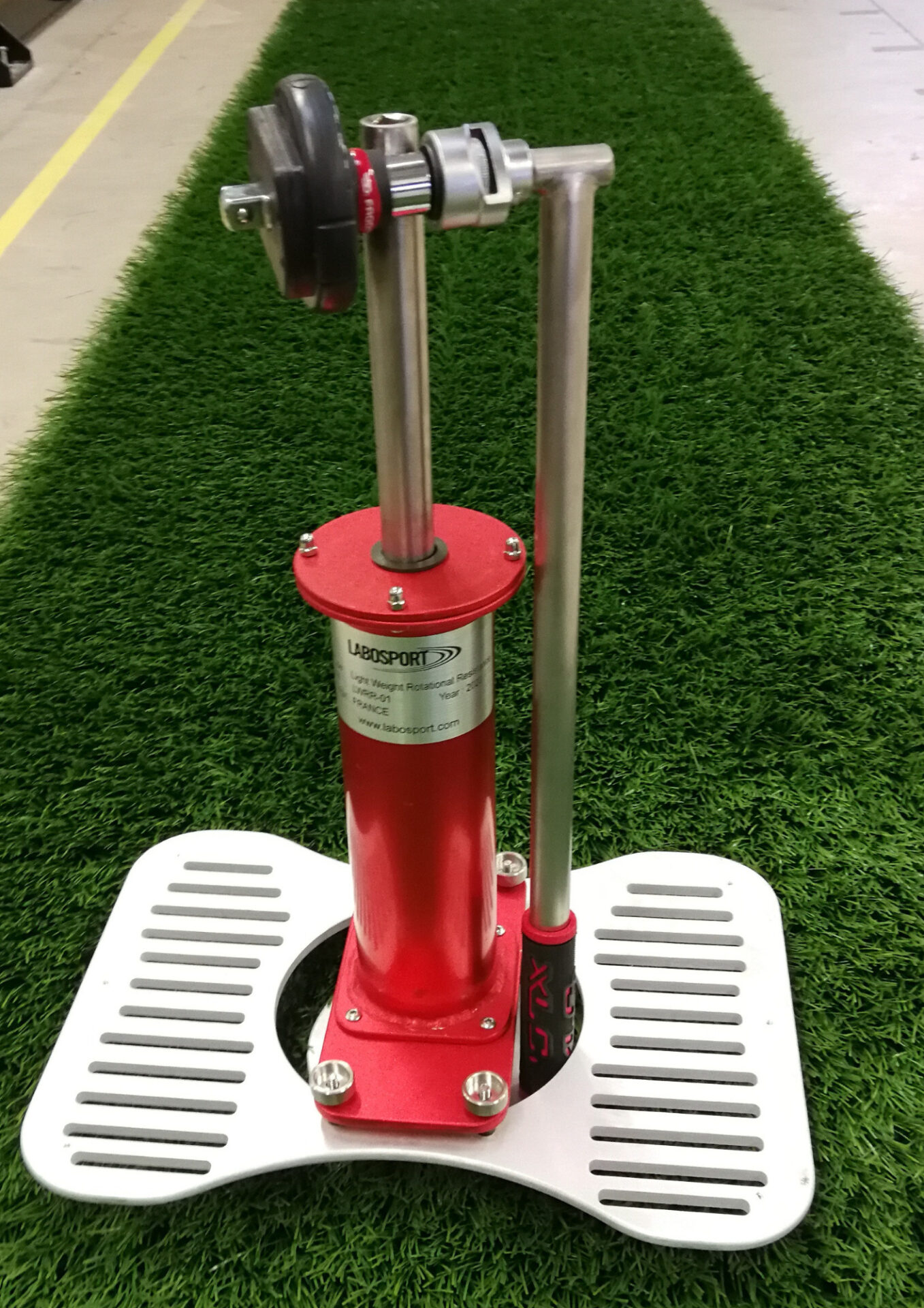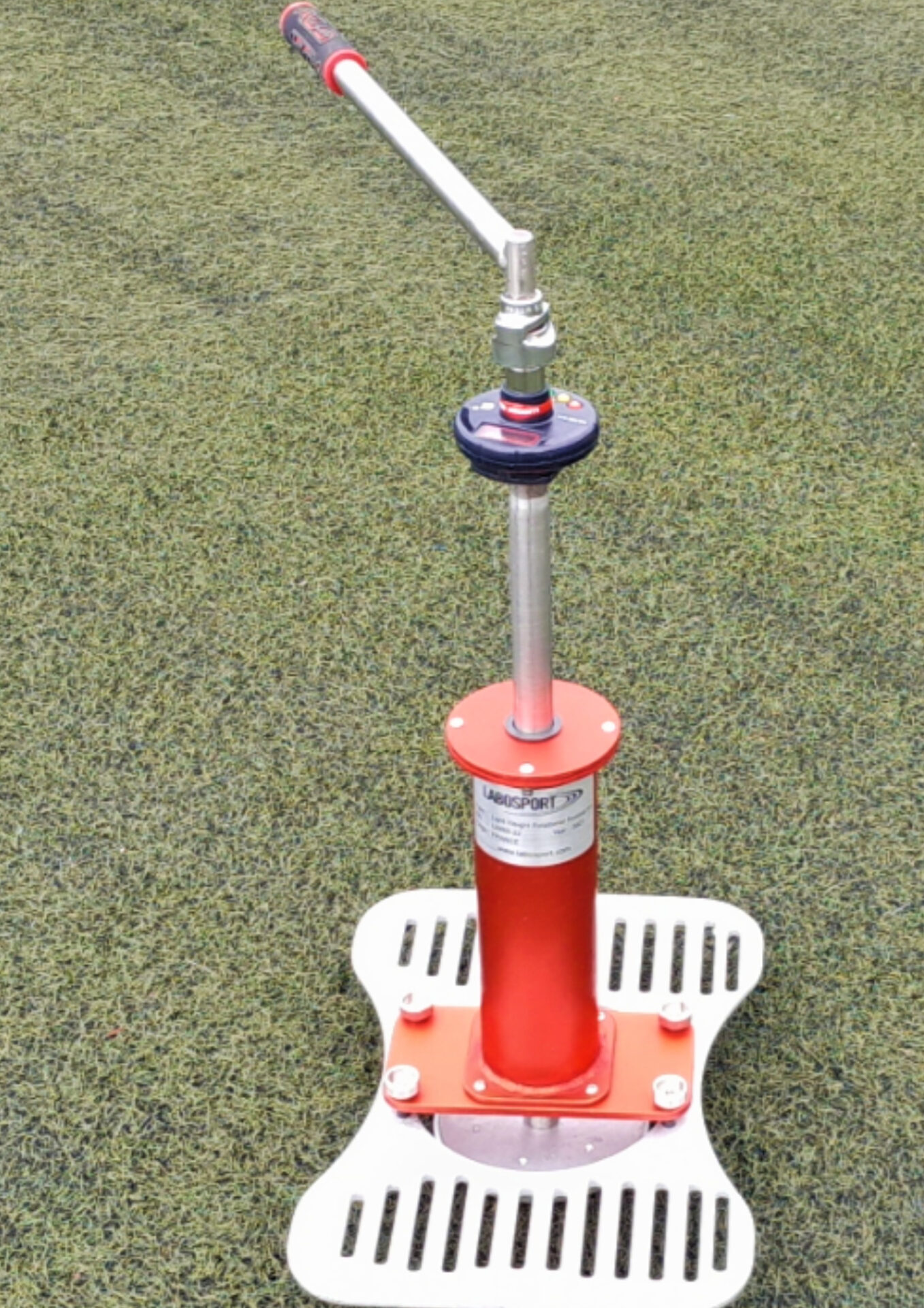






The Labosport Lightweight Rotational Resistance (LwRR) test equipment belongs to a new generation of devices that were invented to test the rotational resistance of both synthetic turf and natural grass fields.
The LwRR was developed in accordance with FIFA standards and serves as a replacement for its predecessor. It offers a more modern version of the assessment apparatus at an affordable price point.
With its sleek design and reduced weight, the LwRR promotes user comfort while simplifying field testing, without compromising on performance.
Why You Need Lightweight Rotational Resistance
The Labosport Lightweight Rotational Resistance (LwRR) test equipment is fully compliant with the FIFA Test Method 06, which is endorsed by World Rugby and is comparable to a standard device under EN 15301-1.
The LwRR boasts a significantly reduced weight of 90% when compared to the original EN 15301-1 test apparatus. Furthermore, the device can be disassembled for added convenience.
During testing, the LwRR offers increased stability thanks to its large studded foot plate. The digital torque meter provides high accuracy and repeatability for both low and high torque values.
To facilitate worry-free travel, the LwRR comes with a strong and compact protective case that includes laser-cut foam inserts. This ensures that the device is properly secured and protected during transport.
How It Works
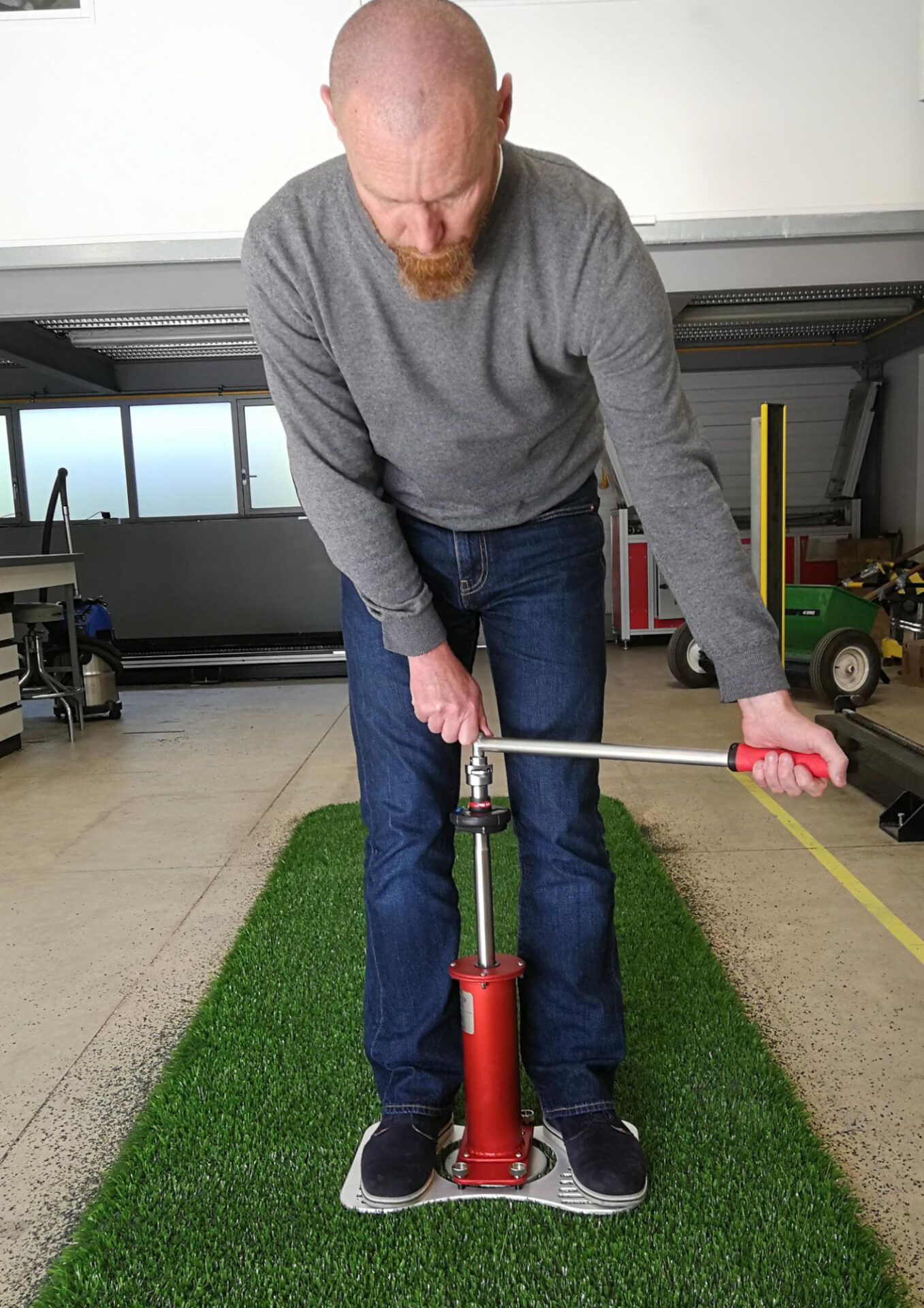
Step 1: Begin by placing the Labosport Lightweight Rotational Resistance (LwRR) test equipment on the surface you wish to test. The bottom of the unit features a round test foot equipped with 6 football studs. To insert the studs into the surface, simply step on the foot. This action will generate a 450 Newtons load, which is produced by a pre-compressed spring that is activated by the user’s weight.
Step 2: With the foot securely planted on the surface, use the torque wrench to initiate rotation of the studded foot. As the foot rotates, the digital torque meter will record the maximum mechanical resistance provided by the surface against the rotation.